


Photo: Julie Inksmith
Starting a business is the yellow brick road to a hustler’s lifestyle, but is that truly the reality?
By: Julie Inksmith
21/4/2026
Who doesn’t wish for financial freedom and stability, as well as working with something you are incredibly passionate about? I want it, you want it, we all want it. We all want to wake up and look forward to the day ahead, going to work with a spring in our step. Then get home in the evening and feel fulfilled about our day’s work. Spending the rest of the evening with family and friends.
On the other hand, what exactly do we have to sacrifice to get there? Do we have to sell our souls to the devil? All good things come with a multitude of obstacles and sacrifices, which at times can feel like the better option is to give up. For example, if you have a small business and sales drop due to inflation. That’s a big obstacle, but what do you do? Give up or adapt? You adapt, learn, and continue to improve yourself and your business. With the popularisation of hustle culture in our generation, it seems that the “ideal” process for achieving self-fulfilment requires us to sacrifice what seems like everything because that’s what a hustler does.
A hustler grinds all day, has no social life and has little to no enjoyment besides working a 15-hour day because that is what the path to success looks like for them. This is not helped by our generation’s tendency to brag about who’s more stressed, who’s got the longest to-do list and who’s had the least amount of sleep. We are supposed to wake up at the crack of dawn and hustle every minute until ungodly hours, as that is something a hustler does. With this lifestyle, our only destination will inevitably be burnout.
The influx of messages saying that our generation needs to hustle, have multiple sources of income and start a business is overwhelming. It’s also not for everybody. You have Elon Musk’s tweets that say, “There are way easier places to work, but nobody ever changed the world on 40 hours a week”. Then you have Gary Vaynerchuk, also known as Gary Vee, a prominent figure in hustle culture and the biggest advocate for work over personal life. In a YouTube video, he says, “hustle your face off 15 hours a day to get people to care”. So, 15 hours of work plus 8 hours of sleep, which gives us 1 hour to eat breakfast, lunch and dinner? He proceeds to say:
People talk about the hustle, but then you’re talking about your 6 O’clock happy hour drink, or your video game, or this or that. And here we are in the holidays, and everybody’s going to their holiday party, and I’ve got one meeting coming up right now, two meetings after that, [then] reviewing my emails. So, while everybody’s drinking some goddamned eggnog, I continue to hustle.”
Reasonably, we all have to work hard to achieve whatever dreams we might have. We can work eight hours a day, go for drinks with our friends on a Friday night, play a video game on a Wednesday evening to wind down and have the weekends free to relax. THAT’S WRONG! Well, at least according to the hustle culture. You have to hustle 15 hours a day, even on weekends. Going out with friends on a Friday night or having time off…forget about it. But, in reality, everything is about balance because hustling like that for a couple of years or decades will only leave you with regret of not spending your youth having some fun. You can still work more than 40 hours a week, but don’t feel guilty about having some free time to do whatever you want.
The opposite stands as well. You can’t just have fun every day with no work, then you’ll spend your older days working hard with bad joints. “Hustle is the most important word,” says Garry Vee, but recently, more people who believe that the hustle culture is getting toxic would beg to differ. So, how does it look to start a small business? We can get an inside look into two co-owners/co-founders of small businesses/startups here in Malmö.
Co-owner of zero-waste store Gram
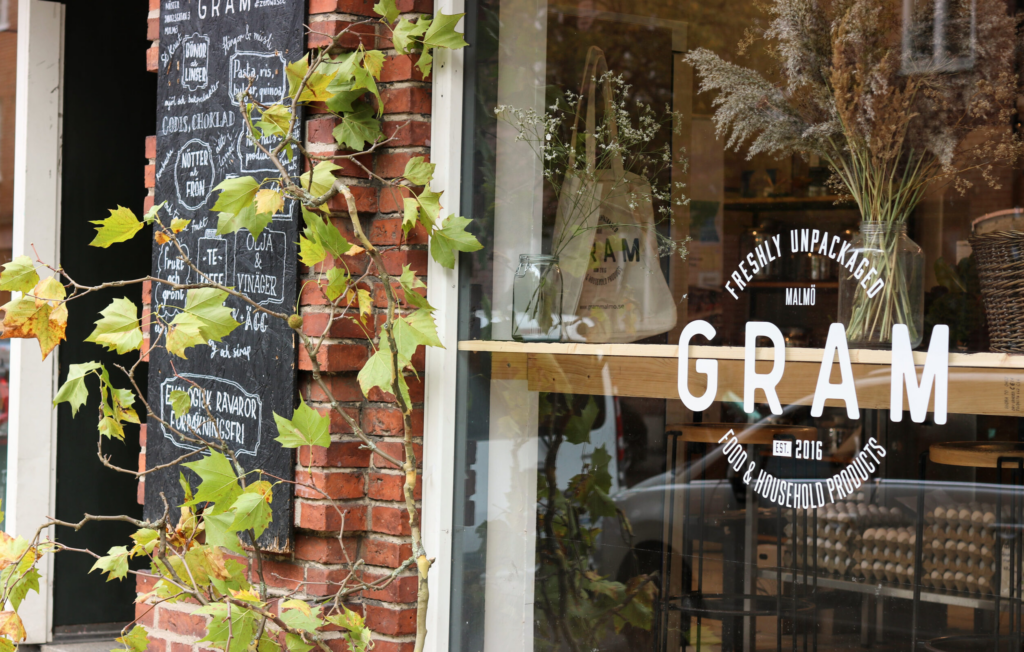
Joanna Liwanowska is the co-owner of a small business called Gram, which is a zero-waste store here in Malmö. Before becoming a co-owner four years ago, she was a customer and heard from the founder and co-owner, Rowan Drury, that she needed an extra pair of hands. Joanna, with the same dream and hope as Gram and Rowan of “trying to make a difference in people’s lives by reducing their plastic waste”, and as Joanna described, she decided to go for it. Joanna talked a lot about “defining your own success” and “what is success to you.”
Because of her own experiences with Gram, she knew that her version of success and her goal wasn’t becoming a millionaire from this business, but rather to make a difference in people’s lives and in the community. It was for all of us to take a step in the right direction regarding plastic waste, and hoping that Gram would “grow organically.” She believes that people really do want to support small businesses that want to make a difference, rather than multi-million-dollar companies. And she was ready to work hard and put in the hours. But, as mentioned previously, everything has its obstacles and sacrifices.
So, what are some obstacles Joanna has had to face along her journey? Well, her obstacles were beyond her control. Not a mistake she made and had to fix, but rather it was the world around her giving her a bad deck of cards. Starting with construction outside the store for 9 months, which led customers to believe the store was closed and caused sales to drop. Electricity bills have been rising by absurd amounts, making businesses across Europe struggle. The state of the world’s economy, with inflation, caused many problems for prices, suppliers, etc. As Joanna put it, they “are becoming like a luxury that not everyone can afford”. With all of these things happening outside Joanna’s control, she feels disheartened: “the reason why we do it is so wonderful and uplifting, but struggle is something that after a while you feel like I’ve given everything. I don’t think I can give anymore.”
With these obstacles, how can anyone feel like they want to keep fighting and be positive? That’s where the magic of hope comes in. “Gram is not us. It’s something that we tried, and it was great, but now it’s in a different season. And maybe because of the whole situation, we need to scale down and just hibernate for a little bit. So that we can come back and flourish,” says Joanna. Just because an obstacle forces you to put your dream on hold doesn’t mean you’ll never jump back on the horse and continue to chase that dream. Sometimes you just need to hibernate, as Joanna said. That’s something the hustle culture doesn’t talk about. Sometimes, no matter how much blood, sweat and tears you put into a business, it might not turn out as expected or be “successful”, and it’s alright to take a step back to brainstorm and re-think.
What does Joanna have to say about our generation’s pressure, from the hustle culture, of starting a small business? One, define your version of success, and don’t let other people or society influence you with their versions. Two, have fun and explore life before dedicating yourself to a business, as your efforts and time reflect on the growth and success of your business. Even if you have multiple side hustles, your small business will grow slowly because of the limited time you have. Three, having somebody you trust to bounce back ideas to and aid you in decision-making. Four, change is good even if it isn’t what you expected or hoped for at times. Five, don’t take things personally, especially when it comes to failure. Failure is good because it means you tried, says Joanna. It doesn’t mean you failed as a person; it just means you learned valuable knowledge.
Co-founder of sustainable start-up Skosh

Max van der Mars (middle standing in the above photo) is a co-founder of Skosh, which is a startup here in Malmö. He came to Sweden from the Netherlands to get his master’s degree in industrial design with a specialisation in sustainable product development. During his seven years of studies, he became interested in entrepreneurship, and then an opportunity presented itself: an innovation challenge where you had to “come up with ideas for pressing problems”. So, Max “team[ed] up with people with a different skill set [and] different discipline”, which led him to team up with his roommate as well as two good friends. With a lot of brainstorming, Skosh came to be with the hope of starting a revolution in the cleaning product industry to “poke the big polluting giant”, as he says. A normal cleaning product is 95% water and 5% product, with a lot of plastic packaging. Skosh dehydrates that 5% into a tablet, and when the customer gets home, they put it in a bottle with water. And boom! You have a cleaning product that also comes with sustainable packaging. A very efficient and convenient product.
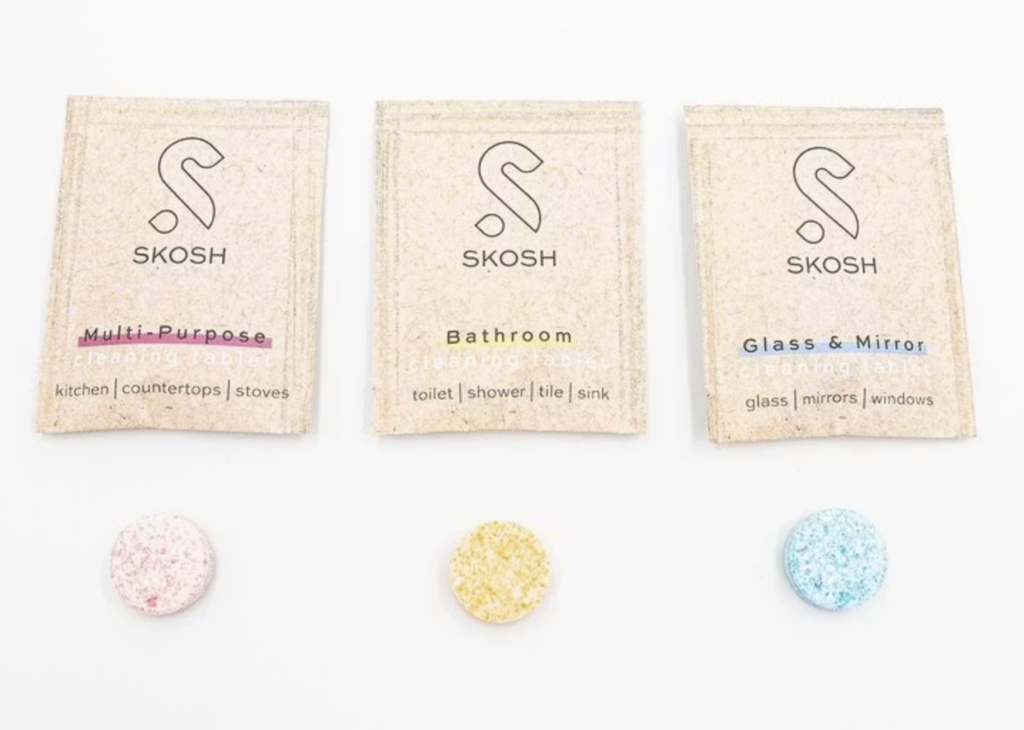
Obstacles for startups can look a bit different compared to small businesses; for example, Skosh uses investments that help them survive for a couple of months to a year. Max explains:
“But then, within another eight months, we have to consider: how are we gonna do next year? How are we gonna grow then? And as soon as there is a major challenge, such as a drop in revenue. How do you adapt? How do you quickly not become stressed out, but how do you adapt to the situation?”
As he puts it, they are in the stage of short-term thinking, which can be very strenuous due to the uncertainty. “So, one day everything is perfectly fine, you’re doing great, and everyone is happy; and then boom! Next week it could be completely different,” says Max. This is the risk of running a startup, he explains. “Maybe you don’t get anything in return money-wise, for example, that your salary gets higher or that your career path is opening up”, he says, which is just another stressful aspect we have to think about. In the hustle culture, it is almost expected that with your intense effort, your salary will increase accordingly, but as Max says, that doesn’t have to be the case. What are the good things, then, you may ask?
You get to build something from the ground up, and it is valued by customers and by people within the company. A big part of businesses is customers and making them happy, or making their lives better in some way. “That is the instant gratification I get out of it, that I make a customer happy with a product that is better for the world,” said Max. He talked a lot about growth and how that is the most satisfying and fulfilling part. For example, they have been working to get their product to ICA. Skosh’s goal is to change people’s shopping behaviour, which is automatic, and to make cleaning fun, since it is something we all have to do. They are slowly achieving that.
Max’s advice is not to feel pressured to follow the current and not be afraid to swim against it because if you do something for that reason, you will not feel happy, and it will reflect on your business. This is similar to hustle culture in that hustlers want to swim against the current of 9-5 jobs. The new trend is to swim against the life of a hustler and instead have a balanced life.
Max continues to explain that making “sure that you have the right people with a multidisciplinary team, who believe in this idea as well” is crucial. Believe in your idea and define your own success. Appreciate the process, as there is a lot of self-worth, growth, and knowledge in it. Take your time before following through with an idea because you can start a business at any age. And along the way, there are going to be a lot of self-doubts, but that is natural, and there are going to be moments when you are jumping with joy when something is achieved.
So, what exactly are we supposed to do in the end with all the hustling? There will always be more questions than there are answers. And, to be a bit cliché, life is YOUR journey, so take it at the pace that fits you and carve your own path of success and growth. Don’t feel pressured to do something you don’t want or don’t feel ready for, like starting a small business. Don’t expect yourself or your work to be perfect. You will have bad days, sad days, happy days, days when you’re excited and inspired, and days you feel like giving up. What matters is that you keep going, one small step at a time.
Sources
GaryVaynerchuk. “The Most Important Word Ever – Gary Vaynerchuk.” YouTube, YouTube, 19 Dec. 2014.
Liwanowska, Joanna. “Interview with Gram.” Interviewed by Julie Inksmith
Mars, van der Max. “Interview with Skosk.” Interviewed by Julie Inksmith
